
Patient Stories
Anna Strachan
When we found out we were expecting a baby in June 2025, we were delighted as we had been trying for a second child for quite some time. We had a private scan at 6 weeks which confirmed my pregnancy and soon my symptoms started. I am fortunate to have had an easy first pregnancy and my second was similar... although the tiredness with a 3 year old to chase after was something else until about 16weeks!
At my 20 week scan, it was noted my placenta was low lying and as I was also at risk of preterm labour due to a late caesarean section with my daughter, I was booked in for a further scan at 30 weeks.
My pregnancy continued as normal and with the exception of occasional aches and pains in my back and along my section scar, I kept well and fairly active.
My 30 week scan was carried out by a consultant rather than a sonographer and I attended with my husband, Fraser. It was quiet, with little description of what was being checked on the screen and we looked at each other anxiously when she suggested I may have PAS and left the room to "discuss with a colleague". We had no idea what she meant and when she returned she advised that she would book me in for an MRI within the next two weeks and a follow up ultrasound for my 32nd week of pregnancy. At this point our heads were spinning with no idea what was going on and I could feel tears fill my eyes as I asked "is my baby ok?"
Of course with no information on "PAS" we turned to Google... the worst thing to do! For the next two weeks I cried myself to sleep every night considering all the eventualities. My daughter was due to turn four at the end of November and all I could think about was how much I wanted to be around to see her grow up. What would happen to her if I died? How would Fraser cope? I had never questioned my own mortality but now I was essentially a ticking time bomb. I didn’t know how to talk about it to people as, at that moment in time, I was fine and my baby was fine.
My follow up scan arrived and I met consultant Dr Priti Nagdeve who confirmed I had placenta percreta - my placenta had grown through to the outside of my uterus. I would need to deliver my baby as soon as possible by planned section and it was very likely I'd need an hysterectomy. We discussed whether my uterus could be saved and was advised that if it could, subsequent pregnancies would be strongly advised against as I was highly likely to be at risk of placenta accreta again. It was at this point I knew our family was complete. I would not risk my life for the chance to see my daughter and baby grow up so I asked for a salpingectomy should an hysterectomy not be required.
It was now early December and I was devastated at the thought of missing Christmas with my daughter for major surgery and a lengthy hospital stay. I was scheduled in for an appointment with MNPI (NHS maternal mental health service) the following week, as well as a follow up appointment to discuss my surgery with Dr Nagdeve.
Shona, a specialist midwife in perinatal mental health, then came into our lives and became a lifeline when we had no idea where to turn next. She suggested we make an "emotional birth plan" and note down everything we could control in a situation where most things were going to be decided for us. This included who would tell me the sex of our baby, where Fraser could go during my surgery, when he could meet our baby, when I could meet our baby and other details like that. She also organised for Fraser to have a room in the hospital accommodation when my surgery date came and for as long as needed afterwards.
At my follow up appointment with Dr Nagdeve, my surgery date was confirmed for 30th Dec. I felt relieved, delighted that I'd be able to enjoy Christmas with my daughter and family and that I had a bit more time to get ready for baby's arrival at 35+4 weeks - I just wasn't ready yet! I was also booked in for steroid injections the week prior to my surgery to give my baby the best chance when they were born.
The 29th Dec arrived and I attended the gynaecology department in Aberdeen Royal Infirmary for the night in preparation for my surgery in the morning. My anaesthetist came by to see me as well as the urologist to make sure I was all set. In the morning the surgical midwife came by to meet me and my husband and Dr Nagdeve came to check everything was ok with us both.
I was then taken down to surgery and was able to walk into theatre and meet some of the team who would be looking after me. While apprehensive about what was to come, having never had surgery before, the whole experience was fascinating. I was given my spinal and cannula put in each hand as well as in my wrist. The surgeons and nurses were so kind and I felt safe and in good hands as I drifted off to sleep.
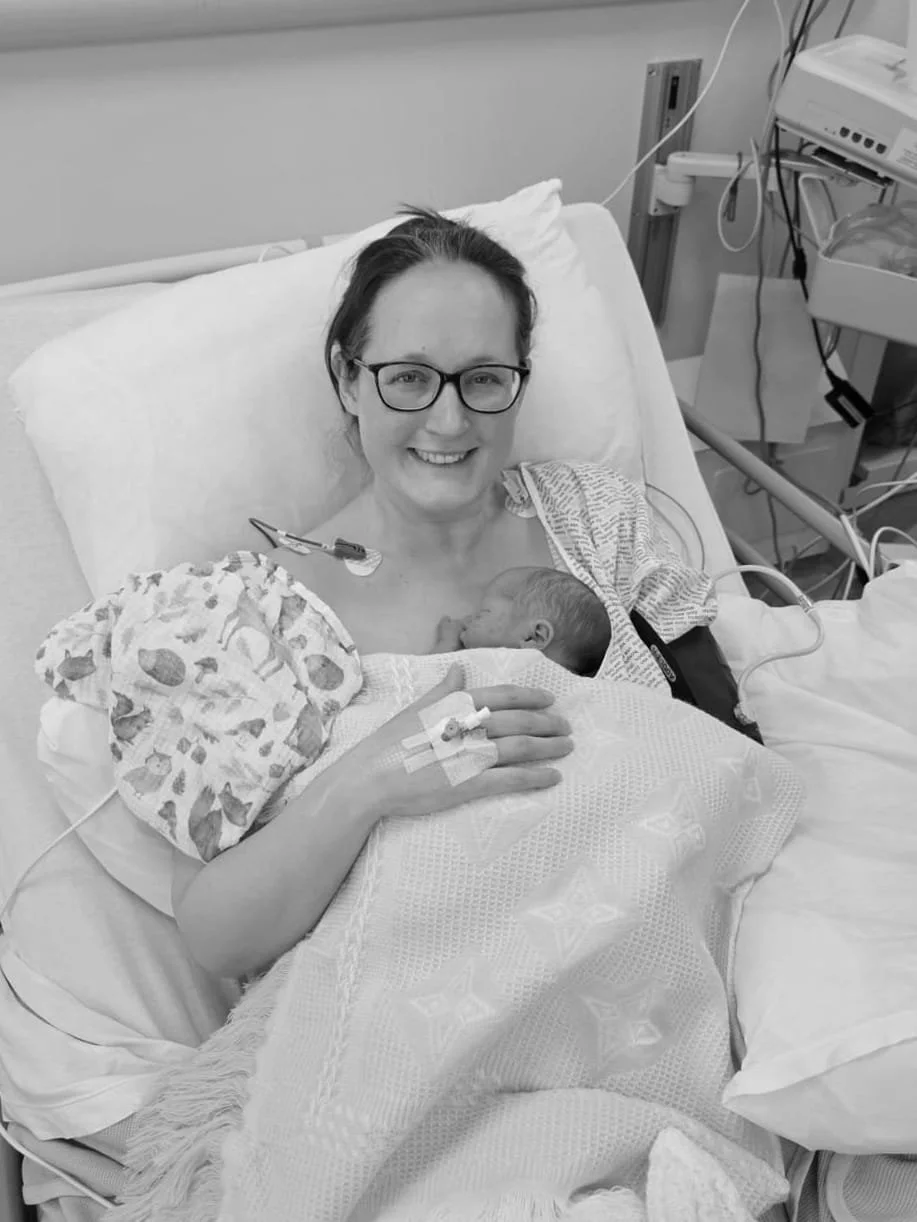
After a six hour surgery, I woke in recovery with the anaesthetist telling me I had a healthy baby who was in neonatal with my husband and that the surgery had gone well. After coming around fully, I was transferred to ITU for the night and was met there by Fraser and my dad. Fraser told me we had a little boy, his weight and that he liked to eat! He had been able to take photos together with him in neonatal and the surgical midwife had taken photos of him for me immediately after birth and on his ambulance journey from Aberdeen Royal Infirmary (ARI) to Aberdeen Maternity Hospital (AMH).
It felt surreal to go to sleep pregnant and wake up having given birth but to have no baby with me... I worried I wouldn't have the same bond with him as I did with my daughter and couldn't wait to meet him.
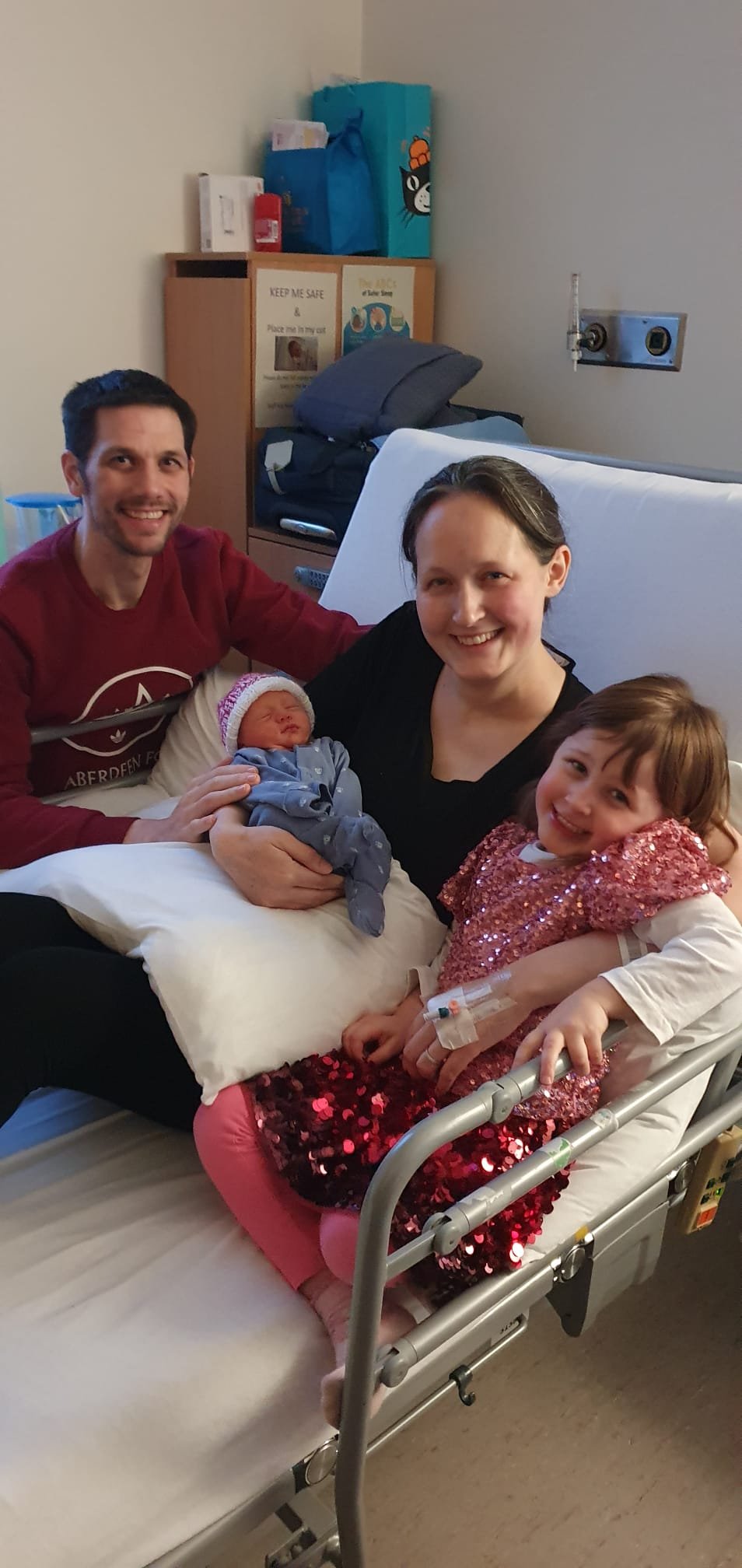
The next day I was transferred to the Labour Ward in AMH. As with my son, I had to go by ambulance as the two hospitals are not connected and this meant getting up from my bed in ITU and onto a gurney. I have never felt pain like it but it was a step towards being better and a step away from my surgery. An hour or so later, I met my son for the first time when a Neonatal nurse and Fraser took him to me in a pram. We had long awaited cuddles and then he had to return for a feed and monitoring. My daughter then came to visit and I was delighted and so grateful to be here for her. She had dressed herself up in a flowery dress, pink shiny trousers and multiple hair accessories to meet her little brother - she could not wait! It was hard to not witness this moment but my family ensured there were videos and photos of the occasion. When everyone left, I cried and cried at everything that had happened and that all the mums around me were leaving to go to wards with their babies and I didn't have mine - I envied them all for a birth I would now never experience.
The next day I was transferred to my own room on the Maternity Ward and by evening, although apprehensive, was encouraged to stand again so I could get into a wheelchair and go to neonatal to see my baby. Just as I sat in the chair, he was wheeled into room, discharged from neonatal - my healthy little boy!
Having been guzzling bottles happily for the first two days of his life, he was less than impressed when we started breastfeeding but after an initial struggle for a day or two, we got into the swing of things!
My catheter was removed after 72 hours and I was beginning to move around a little more easily and in short bursts however soon after my son developed jaundice and required light therapy for several days. Fortunately he could stay with us but it was a worrying time trying to keep him warm and waiting for his blood test results every other day.
During this time, I began to show signs of infection and was prescribed antibiotics to fight whatever was causing it. It was a challenging cycle of new cannula, cultures and medication which really got me down, especially as we had no visitors in hospital for over a week due to the snow and difficult travelling conditions.
I was discharged from hospital after 10 days, with instructions to continue to take it easy as I was still in a lot of pain and my infection was thought to be going away. Sadly I only lasted a day at home before I found myself back in triage with a fever and was admitted back into the Maternity Ward with suspected sepsis.
With a different course of antibiotics my infection finally cleared and I was able to go home again after 4 days complete with my box of painkillers, blood thinners and antibiotics. As I completed each course of medication my mood lifted as I was one step closer to being better but every evening I was bedded early with back and stomach pains. I began to wonder whether this was what it was destined to be like and struggled with my lack of independence and ability to look after my children. Combined with the longest period without sunlight in Aberdeenshire since 1957, January was a pretty miserable month!
At the start of February I was able to get a cancellation appointment with urology and had my ureteric stents taken out - these were inserted during surgery to protect my ureters and bladder due to the proximity of my placenta accreta. The pain I had experienced since my surgery was gone in an instant - I couldn't believe it! I finally felt a bit more normal again and was excited to get some independence back.
As my recovery continues and the months pass, I am grateful to be feeling more "normal" with each new day. I am fortunate to have access to a fantastic physiotherapist and scar massage specialist as well as mental health support from local charity LATNEM and will soon be starting EMDR to process everything that happened in my pregnancy.
Thinking back on my whole experience, I feel incredibly lucky to have met the medical professionals who looked after me from diagnosis through to discharge and beyond. My blood loss was minimal compared to what many experience (two litres) and I was able to receive my own blood back through cell salvage – science is amazing! I was also really fortunate to have a supportive network of friends and family in my life to talk through my feelings in the run up to my surgery and to look after my daughter - I didn't have to worry about her for one moment!
I found Placenta Accreta Scotland when recovering in hospital and it was the lifeline I didn't know I needed. To have all my feelings validated and to be able to talk them through with women who had been there was instrumental in my mental recovery. I was able to listen to the Accreta & Me podcasts with my mum and we both learned so much about the condition - they are a fantastic tool for educating others on the PAS experience.
PAS mum